
Dubbing guides · 3 min read
AI dubbing or human dubbing: what works for Arabic
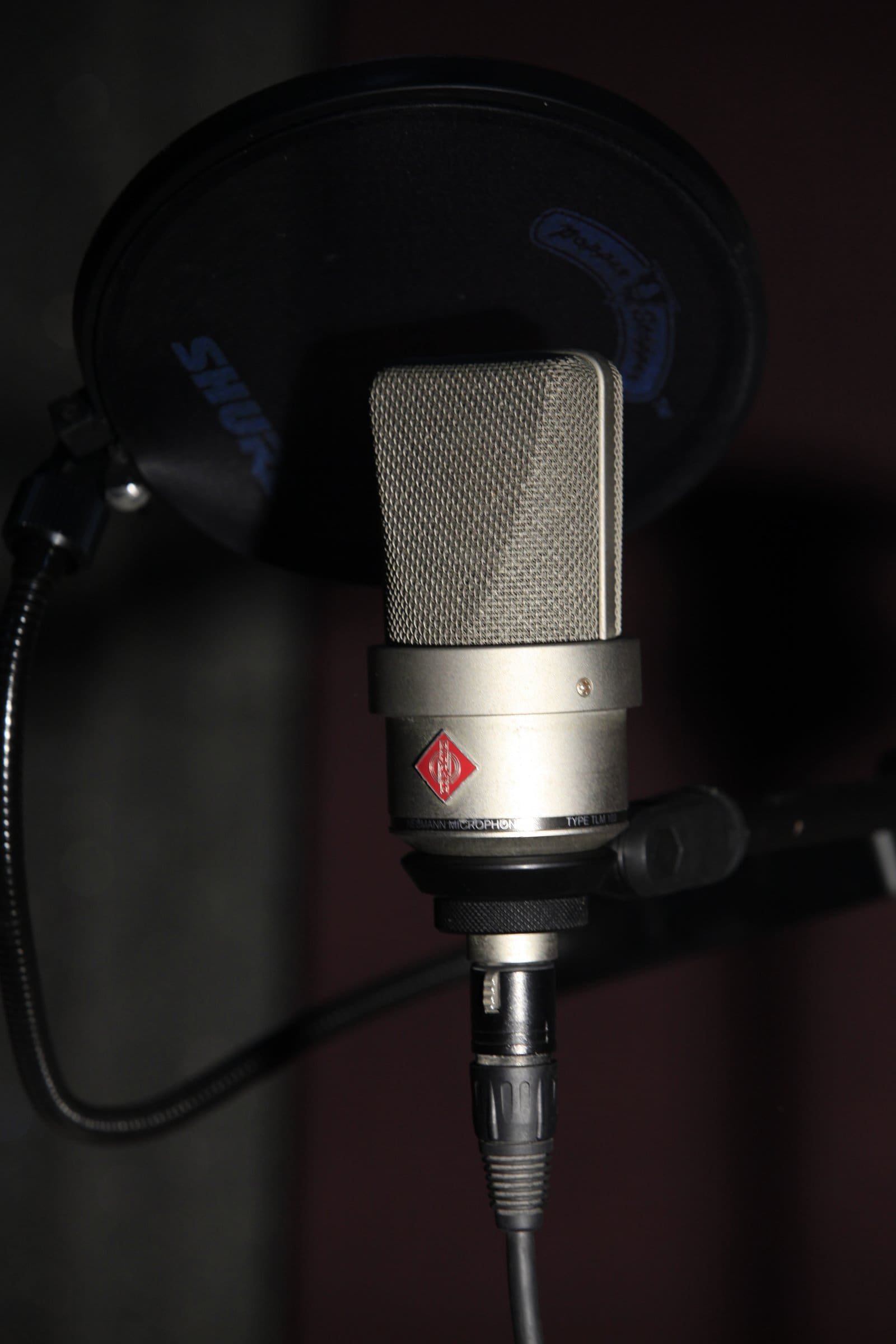
Searches for AI dubbing have more than doubled over the past year, in English and in Arabic. The tools are cheap, fast and getting better every few months, so it is a fair question for anyone with content to localise: do you still need a studio?
Sometimes you don’t. Here is how we would decide, as a studio that dubs with human voice artists.
Where AI dubbing does a good job
AI voices are at their best when the voice carries information rather than a performance:
- internal training and onboarding videos
- product demos and how-to clips
- social posts that live for a week
- rough versions to test whether a title will travel before you pay for a full dub
For these, speed matters more than nuance, and a clear, neutral voice is enough.
Where Arabic makes it harder
Modern Standard Arabic is usually written without short vowels, and the right vowel at the end of a word depends on grammar. Human actors read the sentence and get it right without thinking. A machine reading the same text has to guess, and a wrong ending is exactly the kind of mistake Arab viewers notice and quote back to you.
Dialects are harder still. Many tools offer one standard Arabic voice; getting Lebanese, Syrian, Egyptian, Iraqi or Moroccan Darija to sound like someone from that place, with the right rhythm and expressions, is a different job.
Performance is the part you can’t automate yet
Drama, comedy and animation need acting. A character whispers, laughs mid-sentence, shouts across a room and cries in the next scene. Over a 40-episode series, a synthetic voice that sounds fine for two minutes can start to feel flat, and audiences drift away without saying why.
Lip-sync is the other gap. Making Arabic fit the mouth movements on screen is a writing job: lines are rebuilt so they open and close with the speaker’s lips. Generated speech can be stretched to fit a time slot, but that is not the same as a line written to fit the picture.
Check the rights before you clone a voice
Some tools copy a real actor’s voice. That needs the actor’s clear consent and a contract that says how and where the synthetic voice can be used. If a supplier offers voice cloning, ask whose voices they are and what the actors agreed to. Broadcasters and platforms are increasingly asking the same question.
Children’s content deserves extra care
For animation aimed at children, we would not use synthetic voices. Children learn language from what they hear, and parents and children’s channels expect warm, clear, correct Arabic. Our guide to dubbing children’s animation into Arabic covers what that involves.
A simple way to decide
Use AI where the voice is there to inform, and people where the voice is there to perform. If your audience will judge the characters, the jokes or the Arabic itself, hire actors.
Many projects mix both. A machine translation or transcript can be a first draft, as long as a human adapter rewrites it for lip-sync and culture. Whoever you work with, ask how they use AI and who checks the result before it reaches you.
How we work
Every dub we deliver is cast from our network of more than 500 voice artists and directed in our studios in Beirut and Dubai. If you are weighing AI against a human dub for a specific title, send it over and we’ll tell you honestly which suits it, along with a quote. See our Arabic dubbing and Arabic voice-over pages for more.
Weighing up AI or a studio for your next title? Request a quote. We reply within 24 hours.